




Product Overview & Customization Capabilities
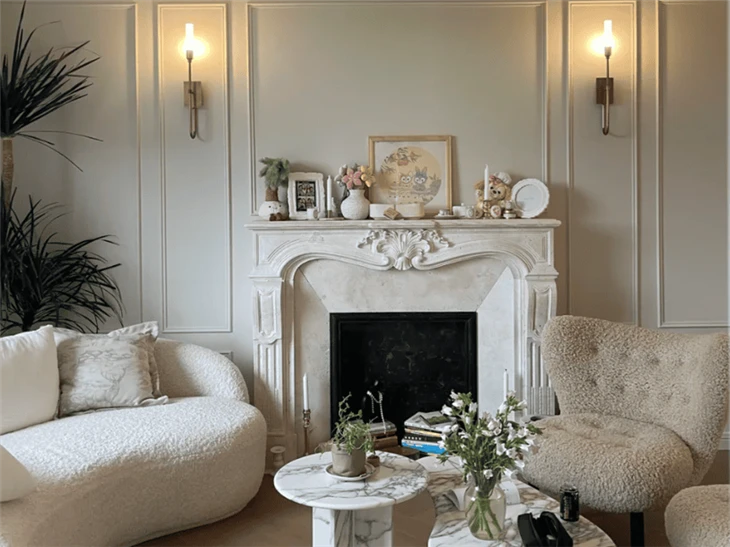
Travertine has a naturally layered appearance that differs from the sharper veining found in many marble varieties. Small pores, mineral deposits and tonal changes can remain visible after finishing, giving the fireplace a more architectural and tactile character.
Beige travertine is the most versatile direction for warm interiors. Its cream, sand and light beige tones coordinate naturally with oak, walnut, limestone flooring, neutral fabrics and brushed metal.
White travertine offers a lighter appearance for interiors that require a brighter stone fireplace while retaining the characteristic variation of natural travertine.
The final appearance depends on the selected quarry material, block, slab or cut pieces and surface treatment. Full-size stone selection is recommended for projects where color consistency is important.
Applications
Residential Living Rooms
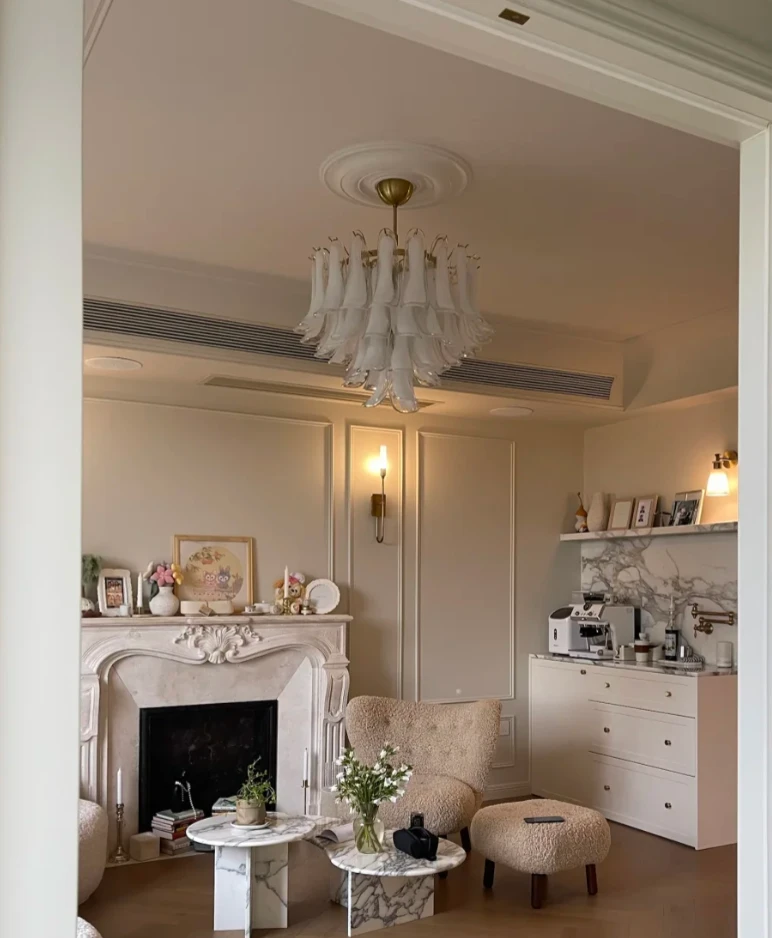
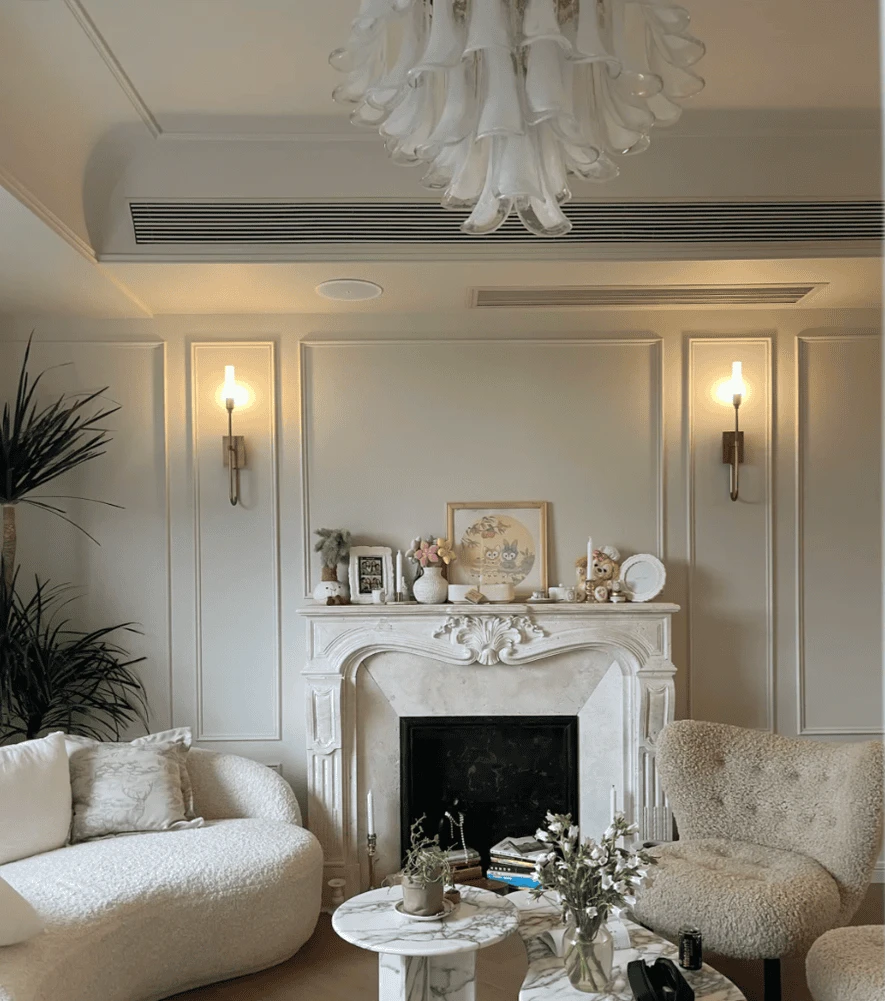
A natural travertine fireplace can serve as the central architectural element of a living room. A full-height surround can extend the visual composition from the firebox toward the ceiling.
Luxury Villas
Custom mantel dimensions, large side panels and coordinated hearth pieces can be developed around the room's wall dimensions and interior layout.
Hotels & Hospitality
Travertine fireplaces can be used in hotel suites, lounges, private dining areas and reception spaces where a natural stone feature is required.
Apartments & Residential Developments
Standardized fireplace dimensions can be developed for repeated units, while stone selection and component numbering help simplify fabrication and installation.
Decorative Interior Projects
A travertine fireplace can also be designed primarily as an architectural feature, with the fireplace opening and surrounding stone treated as one integrated composition.
Custom Travertine Fireplace Fabrication
A Custom Travertine Fireplace starts with the architectural dimensions rather than a fixed product size.
Shop drawings can define:
- Overall fireplace dimensions
- Opening dimensions
- Mantel height and projection
- Side panel dimensions
- Hearth configuration
- Joint locations
- Edge profiles
- Stone orientation
- Installation requirements
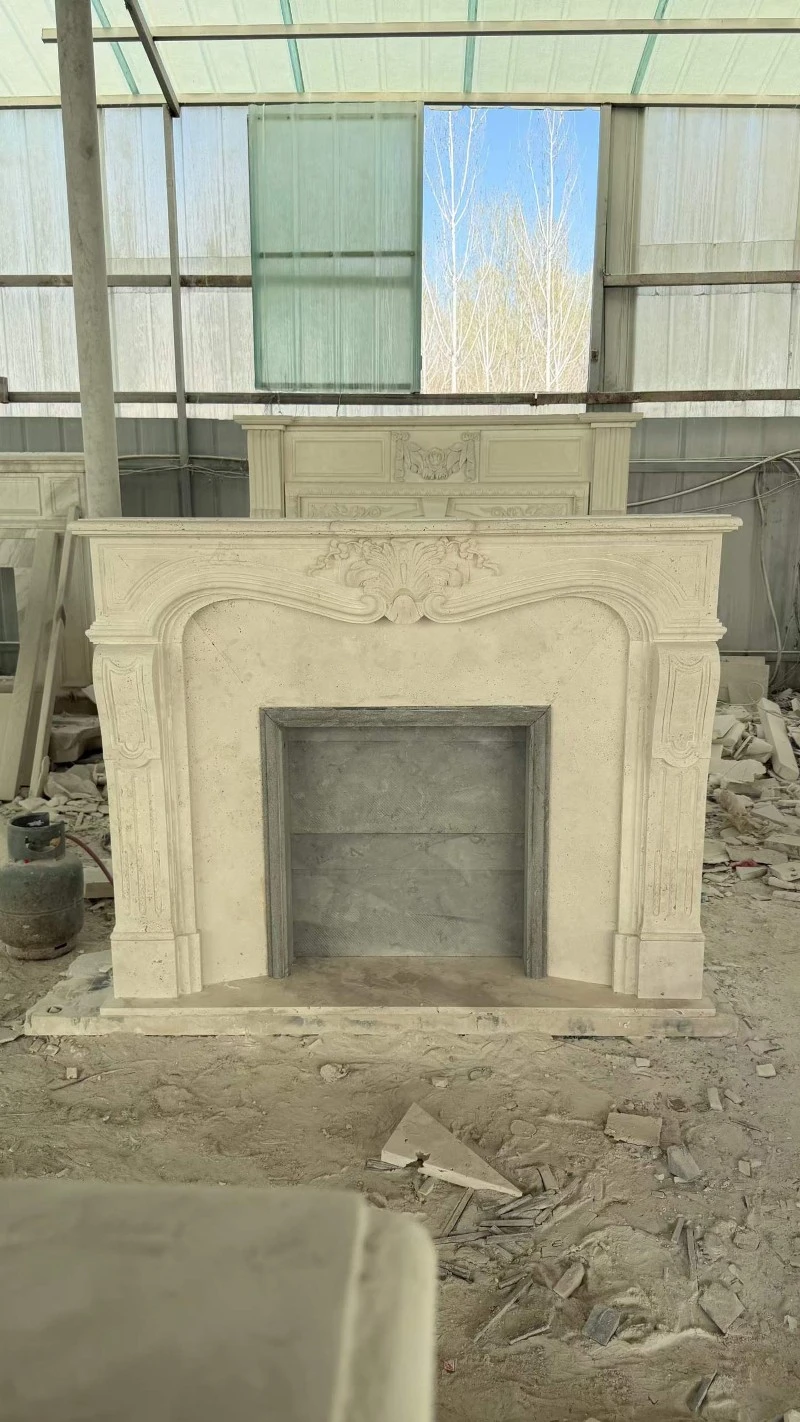
For larger fireplaces, the surround can be divided into manageable components for transportation and installation.
Where appropriate, a supporting internal structure can be incorporated into the fireplace assembly. For one-piece or partially assembled designs, the structure and lifting requirements should be reviewed before production.

Protective Packaging
Finished travertine fireplace pieces require reinforced protection because mantels, headers and profiled components can contain vulnerable corners and edges.
Packaging can be arranged according to the component size and shipping method, with individual protection for finished surfaces and reinforced export crates for larger stone pieces.
For multi-piece fireplace sets, components can be numbered according to the approved installation drawing to simplify receiving and site identification.
FAQ
Can a travertine fireplace be made to custom dimensions?
Yes. The mantel, surround, hearth and side panels can be fabricated according to approved project drawings. Large fireplaces can also be divided into multiple components for transportation and installation.
What is the difference between a travertine fireplace mantel and surround?
The mantel is generally the horizontal shelf or upper architectural element, while the surround frames the fireplace opening. They can be fabricated separately or designed as one coordinated travertine fireplace system.
Is beige or white travertine better for a fireplace?
They create different visual effects rather than serving the same design purpose. Beige travertine provides warmer cream and sand tones, while white travertine creates a lighter appearance. Final selection should consider the surrounding flooring, walls, cabinetry and furniture.
Packaging and Loading

Certifications

