


As a supplier of black marble, I often get asked about the abrasion resistance of this stunning natural stone. Abrasion resistance is a crucial factor, especially for applications where the marble will be subject to high traffic or friction. In this blog, I'll delve into what abrasion resistance means for black marble, the factors that influence it, and how it impacts the use of black marble in various settings.
Understanding Abrasion Resistance
Abrasion resistance refers to a material's ability to withstand wear and tear caused by friction. When it comes to black marble, this characteristic determines how well the stone will hold up over time in areas where it might be rubbed, scraped, or walked on. High abrasion resistance means the marble is less likely to show signs of scratching, scuffing, or surface degradation, maintaining its aesthetic appeal and structural integrity for longer.
Factors Affecting the Abrasion Resistance of Black Marble
Mineral Composition
Black marble is primarily composed of calcite or dolomite crystals. The hardness and arrangement of these minerals play a significant role in its abrasion resistance. Generally, marble with a higher density of harder minerals will have better resistance to abrasion. For example, some black marbles may contain small amounts of quartz, which is a very hard mineral and can enhance the stone's overall durability.
Porosity
The porosity of black marble also affects its abrasion resistance. Porous marble can absorb dirt, moisture, and other substances, which can weaken the surface and make it more susceptible to abrasion. A marble with low porosity is less likely to absorb contaminants, keeping its surface strong and resistant to wear. Sealing the marble can help reduce its porosity and improve its abrasion resistance.
Finish
The finish of the black marble surface can impact its abrasion resistance. A polished finish, which is smooth and shiny, may be more prone to showing scratches and abrasions compared to a honed or textured finish. However, a polished finish can also be more resistant to dirt and staining, which can indirectly affect the long - term abrasion resistance of the stone.
Abrasion Resistance in Different Applications
Flooring
Black marble is a popular choice for flooring in high - end residential and commercial spaces. In areas with high foot traffic, such as lobbies, corridors, and shopping malls, the abrasion resistance of the marble is of utmost importance. A marble with good abrasion resistance will maintain its smooth surface and elegant appearance, even after years of use. For instance, our Tianchuan Gold Marble is known for its relatively high abrasion resistance, making it a great option for flooring applications.
Countertops
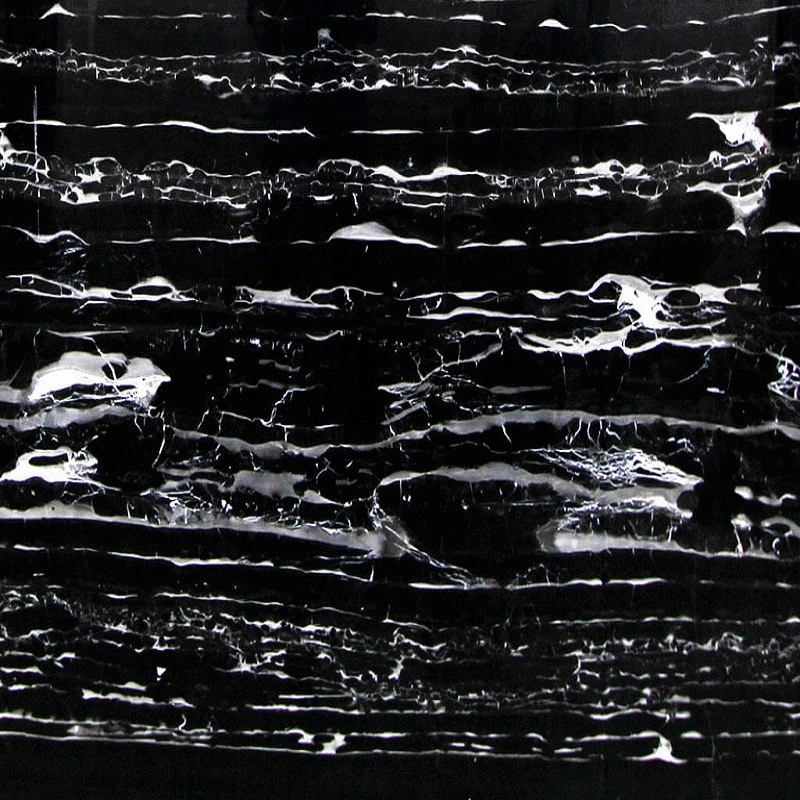
In kitchens and bathrooms, black marble countertops are not only aesthetically pleasing but also need to withstand daily use. Cutting, chopping, and the movement of objects across the surface can cause abrasion. A countertop made of black marble with high abrasion resistance will resist scratches and keep its beautiful look. Our Black Silver Portoro Dragon Marble Slabs offer excellent abrasion resistance, making them suitable for kitchen countertops.
Wall Cladding
Although wall cladding is not subject to the same level of direct abrasion as flooring or countertops, it can still be affected by cleaning, dust, and accidental contact. Black marble with good abrasion resistance will maintain its appearance on the walls, providing a long - lasting and elegant look. Our Elegant Crystal Black Marble Slab is a great choice for wall cladding due to its durability and abrasion resistance.

Testing Abrasion Resistance
There are several methods to test the abrasion resistance of black marble. One common test is the Taber Abraser test, which involves rubbing the marble surface with a rotating abrasive wheel under a specific load for a set number of cycles. The weight loss and surface damage are then measured to determine the stone's abrasion resistance. Another test is the Böhme test, which measures the wear of the marble surface by rubbing it with a rotating disc covered with an abrasive material.
Improving Abrasion Resistance
Sealing
As mentioned earlier, sealing the black marble can improve its abrasion resistance. A high - quality sealer can fill the pores of the marble, preventing the absorption of contaminants and strengthening the surface. Regular re - sealing is recommended to maintain the effectiveness of the sealer.
Maintenance
Proper maintenance is essential for preserving the abrasion resistance of black marble. Using soft cleaning tools, avoiding harsh chemicals, and promptly cleaning up spills can all help prevent damage to the marble surface. Regularly buffing the surface can also help maintain its smoothness and enhance its resistance to abrasion.
Conclusion
The abrasion resistance of black marble is a complex characteristic that is influenced by factors such as mineral composition, porosity, and finish. Understanding these factors can help you choose the right black marble for your specific application. Whether you're looking for a durable flooring material, a long - lasting countertop, or an elegant wall cladding, our black marble products, such as Tianchuan Gold Marble, Black Silver Portoro Dragon Marble Slabs, and Elegant Crystal Black Marble Slab, offer a combination of beauty and durability.
If you're interested in purchasing black marble for your project, I encourage you to contact us for more information and to discuss your specific requirements. We are committed to providing high - quality black marble products and excellent customer service.
References
- "Stone Technology and Conservation" by G. Bentur and S. Mindess
- "Marble: Properties, Uses, and Applications" by John Smith