


Hey there! As a basalt supplier, I often get asked about how basalt forms those cool columns we see in so many places. It's a super interesting topic, and I'm stoked to share the lowdown with you.
Let's start with what basalt actually is. Basalt is a type of volcanic rock. It's formed when lava from a volcano cools down. You know, when a volcano erupts, it spits out this super hot, molten lava. This lava is full of all sorts of minerals and stuff. Basalt is one of the most common types of volcanic rock on Earth, and it's found all over the place.
So, how does it form those columns? Well, it all comes down to the cooling process. When the lava first flows out of the volcano, it's in a liquid state. But as it's exposed to the air or water (depending on where it is), it starts to cool. And here's the key part: as it cools, it contracts.
Imagine you have a big blob of hot, gooey lava. As it starts to cool on the outside, that outer layer contracts. This creates stress within the lava. And because of this stress, the lava cracks. These cracks don't just happen randomly, though. They form in a way that's kind of like a honeycomb. The most common shape for these columns is hexagonal, but you can also see some with five or seven sides.
The reason the columns are usually hexagonal is because it's the most efficient way for the lava to crack under stress. Hexagons fit together really well, and they allow the lava to contract evenly. It's like nature's way of finding the most efficient solution.
Now, the cooling rate plays a huge role in how the columns form. If the lava cools really quickly, like when it hits cold water, the columns will be smaller and more closely packed. On the other hand, if it cools more slowly, the columns can be much larger.

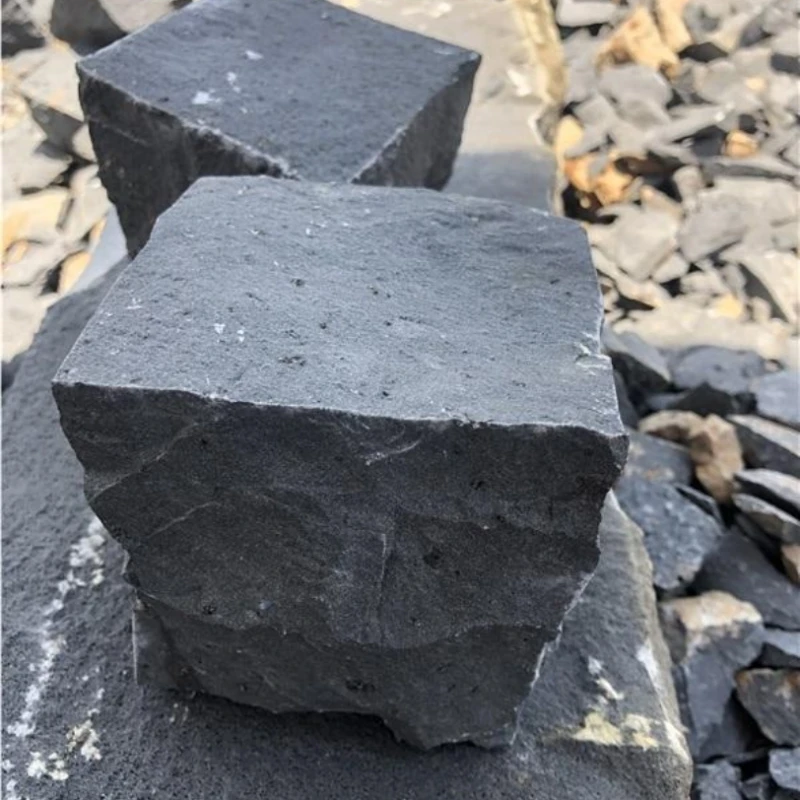
Let's take a look at some real - world examples. One of the most famous places with basalt columns is the Giant's Causeway in Northern Ireland. It's an amazing sight to behold. There are thousands of these hexagonal columns, and they look like they were built by giants, hence the name. The columns there were formed around 50 - 60 million years ago when a series of volcanic eruptions happened. The lava flowed out and then cooled in the sea, creating those stunning columns.
Another great example is Devil's Postpile National Monument in California. Here, the basalt columns are really tall and straight. The lava here cooled at a rate that allowed for the formation of these large, impressive columns. It's a popular tourist spot, and people come from all over to see this natural wonder.
As a basalt supplier, I deal with different types of basalt products. For example, we have the Zhangpu Black Basalt Paver Floor Tiles. These tiles are made from high - quality basalt. They're really durable and look great in any outdoor or indoor setting. The natural beauty of basalt, with its unique texture and color, makes these tiles a popular choice for many projects.
We also offer the Fuding Black Basalt G684 Black Pearl Pool Paver. If you're building a pool or a patio, these pavers are perfect. They can withstand the elements and the constant exposure to water. And the black pearl look gives them a luxurious feel.
And then there's the Hainan Bluestone Project Based Kerb Roadside. These kerbs are ideal for roadsides and landscaping projects. They add a touch of elegance and are very sturdy.
Now, if you're thinking about using basalt in your next project, whether it's a small backyard renovation or a large commercial development, we've got you covered. Basalt is not only beautiful but also very practical. It's resistant to wear and tear, and it can last for a long time.
If you're interested in our basalt products, don't hesitate to reach out. We can provide you with samples so you can see the quality for yourself. We're always happy to answer any questions you might have and help you choose the right basalt products for your needs. Whether you're an architect, a contractor, or a homeowner, we're here to assist you in making your project a success.
So, if you're ready to start using basalt in your project, just drop us a line. We'll work with you to ensure you get the best products at the best prices. Let's turn your vision into a reality with the power of basalt!
References
- "Volcanic Rocks and Magmas: Their Composition, Evolution, and Origin" by John A. Wolff and Thomas E. Bullard
- "The Geology of the Giant's Causeway" by Geological Survey of Northern Ireland
- "Geology of Devil's Postpile National Monument" by United States Geological Survey