


Basalt, a common extrusive igneous rock formed from the rapid cooling of lava, is a material of great interest in various industries due to its unique properties. As a basalt supplier, I have witnessed firsthand the diverse applications of basalt and the importance of understanding how it changes under pressure. This knowledge is crucial not only for geological research but also for industries that utilize basalt products, such as construction, manufacturing, and landscaping.
The Composition and Structure of Basalt
Before delving into how basalt changes under pressure, it is essential to understand its composition and structure. Basalt is primarily composed of plagioclase feldspar and pyroxene, with smaller amounts of olivine, magnetite, and other minerals. Its fine - grained texture is a result of the rapid cooling of lava at the Earth's surface. The minerals in basalt are arranged in a dense, interlocking pattern, which gives the rock its characteristic strength and durability.
The chemical composition of basalt can vary depending on its source and the conditions under which it was formed. Generally, it contains high levels of silica (SiO₂), alumina (Al₂O₃), iron (Fe₂O₃ and FeO), magnesium oxide (MgO), and calcium oxide (CaO). These elements contribute to the physical and chemical properties of basalt, such as its hardness, density, and resistance to weathering.
How Pressure Affects Basalt
Physical Changes
One of the most obvious ways pressure affects basalt is through physical deformation. When subjected to high pressure, basalt can undergo plastic deformation, which means it can change shape without breaking. This is because the minerals in basalt can slide past each other along their crystal planes under the influence of pressure.
At relatively low pressures, basalt may experience elastic deformation. In this case, the rock will return to its original shape once the pressure is removed. However, as the pressure increases, the deformation becomes permanent. The basalt may become more compact, with a decrease in porosity. This compaction can lead to an increase in density and strength, making the basalt more suitable for applications where high - load - bearing capacity is required.
For example, in deep - sea environments, basalt on the ocean floor is subjected to extremely high hydrostatic pressure. Over time, this pressure can cause the basalt to become denser and more resistant to erosion. This property makes ocean - floor basalt a valuable resource for certain construction projects, such as offshore foundations.

Mineralogical Changes
Pressure can also cause mineralogical changes in basalt. Under high - pressure conditions, some of the minerals in basalt may undergo phase transitions. For instance, the plagioclase feldspar in basalt can transform into a more stable, high - pressure form. These phase transitions can significantly alter the physical and chemical properties of the basalt.
In addition, pressure can promote the growth of new minerals. For example, in the presence of water and high pressure, some of the minerals in basalt may react to form new hydrated minerals. These new minerals can affect the strength, porosity, and chemical reactivity of the basalt.
Chemical Changes
High pressure can also influence the chemical reactions that occur within basalt. It can increase the rate of chemical reactions by reducing the volume of the reacting substances. For example, under high pressure, the oxidation of iron in basalt may occur more readily, leading to changes in the color and chemical stability of the rock.
Applications of Pressure - Treated Basalt
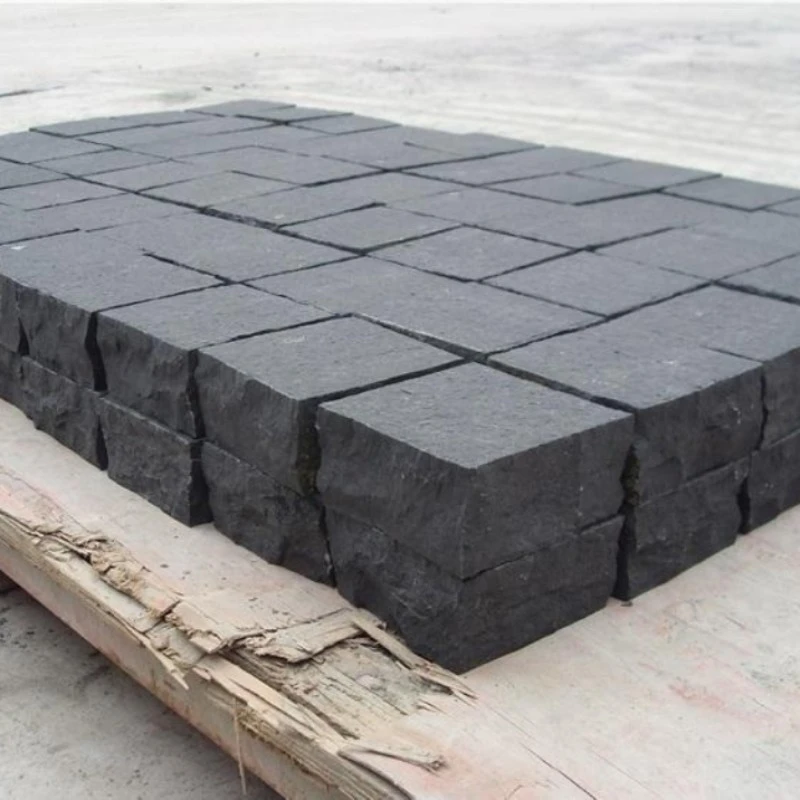
The changes in basalt under pressure have numerous practical applications. In the construction industry, pressure - treated basalt can be used to make high - strength building materials. For example, Zhangpu Black Basalt Paver Floor Tiles are made from basalt that has been processed to enhance its strength and durability. These tiles are ideal for outdoor paving, as they can withstand heavy foot traffic and environmental stress.
In the landscaping industry, basalt that has been compacted under pressure can be used to create retaining walls and other structures. The increased density and strength of the basalt make it more resistant to the forces of gravity and water erosion. Hainan Bluestone Project Based Kerb Roadside is an example of a basalt product that is used in roadside construction. The pressure - treated basalt provides a stable and long - lasting edge for roads and sidewalks.
In the manufacturing industry, basalt fibers can be produced from pressure - treated basalt. These fibers are known for their high strength, heat resistance, and chemical stability. They can be used in a variety of applications, such as reinforcement in composites and insulation materials. Mongolia Black Granite Absolute Black Tile is another product that benefits from the properties of basalt, where the basalt is processed to achieve a high - quality finish and excellent performance.
Quality Control in Basalt Supply
As a basalt supplier, ensuring the quality of our products is of utmost importance. We carefully monitor the pressure - treatment process to ensure that the basalt meets the required standards. This involves testing the physical and chemical properties of the basalt, such as density, strength, and mineral composition.
We also conduct quality control checks during the manufacturing of basalt products. For example, we inspect the surface finish of basalt tiles to ensure that they are smooth and free of defects. By maintaining strict quality control, we can provide our customers with basalt products that are reliable and perform well in their intended applications.
Contact for Procurement
If you are interested in purchasing high - quality basalt products for your construction, landscaping, or manufacturing projects, we invite you to contact us for procurement discussions. Our team of experts is ready to provide you with detailed information about our basalt products, including their properties, applications, and pricing. We are committed to meeting your specific requirements and providing you with the best solutions for your projects.
References
- Deer, W. A., Howie, R. A., & Zussman, J. (1992). Rock - forming minerals. Longman Scientific & Technical.
- Klein, C., & Hurlbut, C. S. (1993). Manual of mineralogy. John Wiley & Sons.
- Press, F., & Siever, R. (1986). Earth. W. H. Freeman and Company.